Selling a catalytic converter in South Dakota
South Dakota added converters to its scrap metal chapter in 2022. A detached converter is nonferrous metal property, only a scrap metal business holding a valid state sales tax license may buy one, and the record has to be kept whatever the converter was worth, which is the one place the statute treats converters differently from everything else. Cash is allowed up to one hundred dollars, and records stay on hand for a year.
Last checked September 13, 2026; source material current as of November 11, 2025. Laws change. Confirm the current statute and its effective date before relying on this page. This is not legal advice.
Who may sell a detached converter
The buying side is limited by a tax license rather than a trade license. Only a scrap metal business with a valid state sales tax license may purchase a detached catalytic converter, and no person may purchase, trade for, or pledge to buy one, or offer or advertise to do any of those things, unless the person follows the requirements of §§ 34A-6-108 to 34A-6-112 (§ 34A-6-109.2). A scrap metal business means any scrap metal supplier, scrap metal recycling center, or scrap metal processor (§ 34A-6-108(5)).
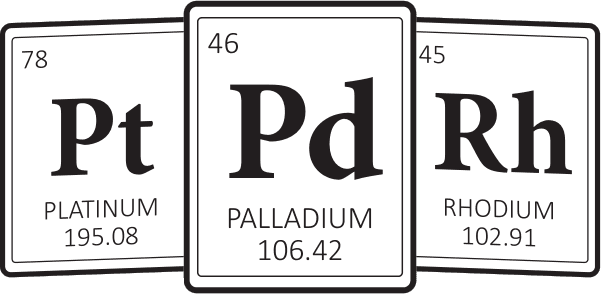
Converters are inside the definition of the regulated commodity. Nonferrous metal property means any metal property whose value is derived from its content of copper, brass, aluminum, bronze, lead, zinc, platinum, rhodium, palladium, or nickel, or any of their alloys, including detached catalytic converters, and aluminum there does not include food or beverage containers except for a beer keg (§ 34A-6-108(3)). The words naming detached converters were added in 2022 (Session Laws 2022, chapter 139, § 1).
The seller needs no license or permit at all. A transaction means a pledge to buy, the purchase of, or the trade for nonferrous metal property by a scrap metal business from any person, and it does not include a sale or trade involving an industrial or commercial account, meaning any person or business operating from a fixed location that sells nonferrous metal to a scrap metal recycler under a contractual arrangement or agreement (§ 34A-6-108(6), (1)). What the seller has to produce is identification and a signature rather than credentials (§ 34A-6-109(2), (4)).
What the buyer must record
The threshold is one hundred dollars, except for converters, which are always recorded. Each scrap metal business keeps records of each transaction involving the purchase of nonferrous metal property that exceeds one hundred dollars, provided that records of any transaction involving a detached catalytic converter must be kept regardless of purchase price, and the business has to be able to produce an accurate and legible record of each transaction at the location where the scrap metal is purchased (§ 34A-6-109).
Six items make up the record. The date, location, and value of the transaction; the signature of the person selling the nonferrous metal property; the name, street address, city, and state of the seller; a photocopy of the seller's current driver license or other government issued picture identification card; a description of the predominant types of nonferrous metal property involved, including the weight, quantity, or volume; and the name of the employee representing the scrap metal business in the transaction (§ 34A-6-109(1) to (6)). South Dakota does not require a photograph of the seller, a photograph of the unit, a fingerprint, or the donor vehicle's identification number.
Inspection, retention, and reporting are all short. The record is open to the inspection of any law enforcement officer at all times during ordinary business hours, or at reasonable times where ordinary hours are not kept, and is maintained at the location the business is conducted for one year following the date of the transaction (§ 34A-6-110). Where an officer requests a copy, the business furnishes a full, true, and correct transcript of the record and provides or transmits it to the agency within two business days (§ 34A-6-111). Where the business has good cause to believe that nonferrous metal property in its possession is lost or stolen, it promptly reports that to a law enforcement officer together with the owner's name if known, the date of the transaction, and the name of the person it came from (§ 34A-6-111).
How you are paid
Cash stops at one hundred dollars. Any payment for the purchase of nonferrous metal property that exceeds one hundred dollars shall be made by either check or electronic funds transfer (§ 34A-6-109.1). The figure is the same one that sets the general record threshold, so a converter under a hundred dollars may be paid in cash while still being recorded (§§ 34A-6-109, 34A-6-109.2).
There is no payment delay and no standing hold. Nothing in §§ 34A-6-108 to 34A-6-112 tells the business to wait before paying, to mail the payment, to make it out to a particular person, or to keep a converter intact for a set period. The only retention clock is the one year the record has to survive (§ 34A-6-110).
The hold that exists is triggered by an officer. Where a scrap metal business is notified by a law enforcement officer that an item of nonferrous metal property has been reported stolen, the business holds that property intact and safe from alteration, damage, or commingling, places an identifying tag or other suitable identification on it, and holds it for the period the agency directs, up to a maximum of ten business days (§ 34A-6-112). An officer may not place a hold unless the agency reasonably suspects the property is lost or stolen, any hold has to be removed within ten business days, and property determined not to be lost or stolen is returned to the owner or released (§ 34A-6-112).
Penalties
The converter provisions carry no penalty of their own. Neither § 34A-6-109.2 nor §§ 34A-6-108 to 34A-6-112 names a grade, a fine, or a license consequence for a violation, and the 2022 act that created the converter rule added none (Session Laws 2022, chapter 139, §§ 1 to 3). The one express penalty in this part of the chapter is for beer kegs: no recycler, scrap metal dealer, or scrap yard operator may purchase a metal beer keg, damaged or undamaged, except from the brewer or its authorized representative where the keg is clearly marked as the brewery's property or its identification markings have been made illegible, and a violation is a Class 2 misdemeanor (§ 34A-6-107).
Theft of the converter itself is graded under the general theft statutes by value. Theft is petty theft in the second degree, a Class 2 misdemeanor, where the value of the property stolen is four hundred dollars or less (§ 22-30A-17.3), and petty theft in the first degree, a Class 1 misdemeanor, where it exceeds four hundred dollars but does not exceed one thousand dollars (§ 22-30A-17.2).
Above a thousand dollars the ladder becomes felony grand theft. It is a Class 6 felony where the property exceeds one thousand dollars but is less than or equal to two thousand five hundred dollars, a Class 5 felony above two thousand five hundred and up to five thousand dollars, a Class 4 felony above five thousand and up to one hundred thousand dollars, and a Class 3 felony above one hundred thousand and up to five hundred thousand dollars (§ 22-30A-17).
What this means when you sell to us
Bring a current license or other government issued picture identification card, because South Dakota requires a photocopy of it in the record, along with your name, street address, city, and state, and your signature on the transaction (§ 34A-6-109(2) to (4)). Expect the paperwork no matter how small the sale: converters are recorded regardless of purchase price, unlike other nonferrous metal, which is only recorded above one hundred dollars (§ 34A-6-109). Cash is available up to one hundred dollars; anything above that South Dakota requires us to pay by check or electronic funds transfer (§ 34A-6-109.1). We keep the record for a year at the yard where you sold, and any law enforcement officer may inspect it during business hours (§ 34A-6-110).