Selling a catalytic converter in Idaho
Idaho added catalytic converters by name to its scrap dealers chapter in 2023, and put them in two categories at once. A converter is always nonferrous metal property, and it is commercial metal property when a commercial enterprise is the one selling it. That split decides the paperwork: a business seller needs a commercial account or written proof of ownership or authority, while a private seller needs the identification, record, declaration, and image the chapter requires of every public sale.
Last checked September 13, 2026; source material current as of November 11, 2025. Laws change. Confirm the current statute and its effective date before relying on this page. This is not legal advice.
Who may sell a detached converter
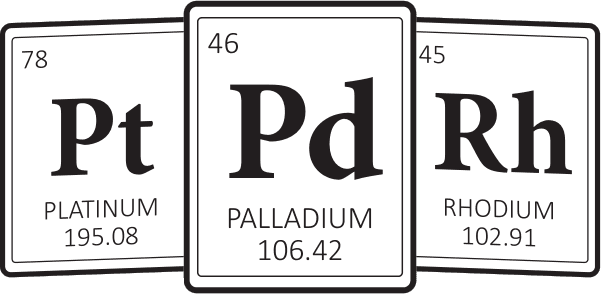
Catalytic converters appear in the list of commercial metal property alongside access covers, street light poles, guardrails, highway signs, utility-marked metal, railroad materials, wiring, fence panels, bleachers, historical markers, grave markers, and agricultural irrigation equipment, and the definition opens "property sold by a commercial enterprise consisting of", so the class turns on who is selling (§ 54-2701(3)). They also appear in the definition of nonferrous metal property, which covers metal whose value comes from copper, brass, aluminum, bronze, lead, zinc, nickel, gold, silver, platinum, rhodium, or palladium content and expressly includes stainless steel beer kegs and catalytic converters (§ 54-2701(4)).
The consequence is in § 54-2703, and it splits the same way. No scrap metal business may buy or receive commercial metal property unless the seller has a commercial account with that business, can prove ownership by producing written documentation that the seller owns the property, or can produce written documentation that the seller is an employee or agent authorized to sell it on behalf of a commercial enterprise (§ 54-2703(2)). Because commercial metal property is defined as property sold by a commercial enterprise, that requirement does not reach a converter offered by a private individual (§ 54-2701(3)). What binds that sale is § 54-2703(1): no scrap metal business may enter a transaction to buy nonferrous metal property or stainless steel from anyone who cannot produce the identification § 54-2702(1)(e) describes, and the § 54-2702 record, declaration, and image then apply.
A commercial account is an ongoing, properly documented relationship between a scrap metal business and a commercial enterprise (§ 54-2701(1)), and a commercial enterprise is a corporation, partnership, limited liability company, association, state agency, political subdivision, public corporation, or any other legal or commercial entity (§ 54-2701(2)). Several transactions are outside the chapter entirely: those by motor vehicle dealers and automotive repair facilities that do not themselves meet the definition of a scrap metal business, dealing in empty food and beverage containers other than beer kegs, transactions worth less than twenty dollars, anyone who receives no compensation for the metal, and authorized insurers as § 41-110(1) defines them (§ 54-2708).
What the buyer must record
At the time of each transaction involving nonferrous or stainless steel metal property, a scrap metal business produces, wherever the business is conducted, an accurate and legible record in English, on a standardized or electronic form, retained for five years (§ 54-2702(1)). It holds the signature of the person the transaction is made with, the date, location, and value of the transaction, the name of the employee representing the business, the name and street address of the other party, a photocopy or digital image of a current Idaho-valid driver license or a United States or Idaho government-issued picture identification of the seller, and the plate number of any vehicle required to have one that the seller used (§ 54-2702(1)(a) to (f)).
Every such transaction also carries a signed declaration, kept for five years, which may sit inside the transaction record or on the receipt and has to state substantially: "I, the undersigned, affirm under penalty of law that the property that is subject to this transaction is not to the best of my knowledge stolen property." (§ 54-2702(2)). The seller signs and dates it and notes the time of day, and an employee of the scrap metal business witnesses the signing and signs it before the transaction may be completed (§ 54-2702(2)). Transactions involving the sale of nonferrous metal property also carry a digital, photographic, or videographic image of the transaction covering the person, the property, and the vehicle involved, used only for the purposes the section defines, a requirement that falls away from the fourth purchase onward from the same member of the general public to the same business within one year (§ 54-2702(3)).
Commercial accounts are documented once and then transaction by transaction. The business creates and keeps a permanent record for at least five years naming the commercial enterprise, its business address and telephone number, the primary contact authorized to deliver metal property, and the primary contact authorized to let the business take possession of metal at the enterprise's own location (§ 54-2704(1)). The account record documents every purchase or receipt in the previous five years, with at least the time, date, and value of the property and a description of the predominant types (§ 54-2704(2)). On request by any commissioned law enforcement officer of the state or a political subdivision, the business makes available a full, true, and correct record of a purchase involving a specific individual, vehicle, or item, provided the record still exists, and that information may be transmitted within a specified time of not less than five business days electronically, by facsimile, by modem or similar device, or on disk, subject to approval by the chief of police or the county's chief law enforcement officer, with the option of arranging an on-site records review instead (§ 54-2705).
How you are paid
Idaho sets no payment rule for a sale by a member of the general public. There is no cash ban, no dollar threshold above which a check is required, no address the money has to be sent to, and no waiting period before a seller can be paid. The chapter's only payment provision covers commercial accounts, where payment for nonferrous metal, stainless steel, or commercial metal property bought or received under the account is made by cash, credit card, electronic funds transfer, or check payable to the commercial enterprise (§ 54-2704(3)).
There is also no standing hold on the metal. What exists instead is a conditional hold: following notification, verbally or in writing, from a commissioned law enforcement officer that an item of nonferrous metal property, stainless steel, or commercial metal property has been reported stolen, the scrap metal business has to hold that property intact and safe from alteration, damage, or commingling, place an identifying tag or other suitable identification on it, and keep it for as long as the agency directs up to a maximum of five business days (§ 54-2706).
One anti-structuring rule shapes how a lot can be split. It is a misdemeanor for a scrap metal business to engage in a series of transactions valued at less than twenty dollars with the same seller at the same location within a twenty-four hour period for the purpose of avoiding the chapter's requirements (§ 54-2707(1)(e)). That matters because transactions under twenty dollars are otherwise exempt (§ 54-2708(4)), so the exemption cannot be used to break a converter lot into untracked pieces.
Penalties
Six things are misdemeanors under the chapter. Deliberately removing, altering, or obliterating a manufacturer's make, model, or serial number, a personal identification number, or identifying marks engraved or etched on nonferrous or commercial metal property in order to deceive a scrap metal business; knowingly making, causing, or allowing a false entry or misstatement of any material matter in a book, record, or writing the chapter requires; signing the declaration knowing the property is stolen; a scrap metal business knowingly possessing commercial metal property not lawfully purchased or received under the chapter; the twenty-dollar structuring practice; and intentionally violating § 54-2703 (§ 54-2707(1)(a) to (f)).
Repeat offending escalates for everyone except the business itself. Any person other than a scrap metal business who pleads guilty to or is found guilty of violating the section for a second time within five years is guilty of a felony (§ 54-2707(2)). Separately, knowingly and intentionally taking copper or other nonferrous metals from an electrical substation without the utility's authorization, or from a utility or communications services provider in a way that damages its facilities or interferes with its ability to provide service, is a felony (§ 54-2707(3)).
Idaho also shields metal owners from civil claims arising out of theft. A public or private owner of metal property is not civilly liable to a person injured during the theft or attempted theft of that property, nor for injuries caused by a dangerous condition created by the theft or attempted theft where the owner did not know and could not reasonably have known of it, and the section creates no duty of care that would not otherwise exist at common law (§ 54-2707(4)).
What this means when you sell to us
If you are selling as a business, Idaho treats the converter as commercial metal property, so we need either a commercial account with you or written documentation that you own the units or are authorized to sell them for the owner (§ 54-2701(3), § 54-2703(2)). Bring a current Idaho-valid license or a United States or Idaho government photo ID, which we copy (§ 54-2702(1)(e)). You sign and date the not-stolen declaration and note the time, and one of our staff witnesses it before we can complete the purchase (§ 54-2702(2)). We photograph the transaction and keep everything five years (§ 54-2702(1), (3)). Idaho sets no payment method for public sales, so our own terms apply; commercial accounts are paid to the business (§ 54-2704(3)).