Selling a catalytic converter in Montana
Montana counts a catalytic converter as nonferrous metal and, since 2023, gives converters their own section of the nonferrous metal statute. There is no state license for either side of the sale. What Montana adds instead is a one-a-day volume limit on private sellers, proof that the converter came off the seller's own vehicle, a thirty dollar cash ceiling, and a seventy-two hour wait before any money changes hands.
Last checked September 13, 2026; source material current as of November 11, 2025. Laws change. Confirm the current statute and its effective date before relying on this page. This is not legal advice.
Who may sell a detached converter
Montana does not license scrap buyers or sellers, so the gate here is volume rather than credentials. A seller who is not a licensed salvage metal dealer may not sell more than one catalytic converter to a salvage metal dealer in a day (§ 30-22-104(1)). A salvage metal dealer is anyone in the business of paying, trading, recycling, or bartering for or collecting nonferrous metals that have served their original economic purpose, whether or not the person also performs the manufacturing process that converts metal into prepared grades (§ 30-22-101(3)). A seller is simply a person who sells, delivers, or otherwise makes nonferrous metal available to such a dealer (§ 30-22-101(4)).
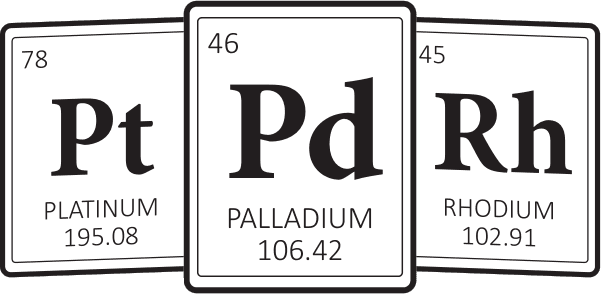
The statute reaches converters because the definition of nonferrous metal names them. Nonferrous metal means metal and metal alloys not containing significant quantities of iron or steel, including copper, brass, aluminum other than aluminum cans, bronze, lead, zinc, nickel, stainless steel including stainless steel beer kegs, and precious metals, including catalytic converters and their component parts and materials (§ 30-22-101(1)). That last item arrived with the 2023 amendment to the definitions section (§ 30-22-101, History, amended by chapter 372, Laws of 2023).
Ownership is proved on paper rather than by license. Where a transaction includes a catalytic converter, the dealer's acquisition record has to contain documentation showing the converter was removed from a vehicle registered to the seller (§ 30-22-102(2)(g)). Montana backs that with a transport offense: moving more than one converter that is not connected to a vehicle exhaust system, purposely or knowingly and without a nonferrous metal acquisition record, is a crime unless the person is acting in conformance with the junk vehicle program in Title 75, chapter 10, part 5 (§ 45-6-321(1)).
What the buyer must record
A salvage metal dealer keeps a nonferrous metal acquisition record for every nonferrous transaction that includes a catalytic converter or that exceeds fifty dollars, so a converter is recorded whatever it is worth (§ 30-22-102(1)(a)). The record is retained for not less than two years from the date of the transaction (§ 30-22-102(1)(b)) and made available to any peace officer on demand (§ 30-22-102(1)(c)).
Seven items go into it: the time and date of the transaction and the name of the person conducting it for the dealer (§ 30-22-102(2)(a)); a general description of the property acquired, using scrap specifications recognized by the Institute of Scrap Recycling Industries, including the type and amount and, if readily discernible, any identifiable marks (§ 30-22-102(2)(b)); the amount of consideration given (§ 30-22-102(2)(c)); a photocopy or scanned copy of the seller's current, valid driver license, passport, or state identification card (§ 30-22-102(2)(d)); the signature of the seller or transferor (§ 30-22-102(2)(e)); a description of any motor vehicle and its license number used in the delivery of the metal (§ 30-22-102(2)(f)); and, for a converter, the registration documentation already described (§ 30-22-102(2)(g)).
One carve-out is worth knowing. The identification copy required by subsection (2)(d) does not apply where a check for payment is provided to the seller or transferor (§ 30-22-102(2)(d)). Because converter money above thirty dollars has to be paid by check in any event (§ 30-22-104(2)(b)), many converter sales land on the side of that line where the check rather than the photocopy is the record of who was paid.
How you are paid
Montana allows cash, but only a little of it. Unless the transaction or exchange is with another salvage metal dealer, a dealer may not pay more than thirty dollars in cash, by stored value device, or by electronic fund transfer for any transaction that includes a catalytic converter, and any additional consideration contracted for must be paid by check (§ 30-22-104(2)(b)). Thirty dollars is the ceiling for the transaction, not a figure per converter.
The timing rule is the stricter one. Again unless the other side is a salvage metal dealer, the dealer may not provide any consideration to a seller of a catalytic converter until seventy-two hours after the most recent transaction between that dealer and that seller (§ 30-22-104(2)(a)). The clock runs from the most recent transaction between the same two parties, so a seller who comes back the next day restarts it.
Nothing in part 1 tells the dealer to hold the converter itself, tag it, or keep it intact for a period, and nothing directs payment to a particular address. The seventy-two hours attaches to the money and the two-year clock attaches to the record (§ 30-22-102(1)(b)). Transactions between two salvage metal dealers sit outside both of the rules in subsection (2) (§ 30-22-104(2)).
Penalties
The dealer-side penalty is narrow and strict at the same time. A salvage metal dealer who violates § 30-22-102 is guilty of a misdemeanor, and absolute liability as provided in § 45-2-104 is imposed for that violation (§ 30-22-103), so no mental state has to be proved. By its terms § 30-22-103 reaches violations of the recordkeeping section only; it does not name § 30-22-104, which the legislature added fourteen years later.
The transport offense is where the heavier exposure sits. A person convicted of illegal transportation of catalytic converters shall be fined an amount not to exceed five thousand dollars or be imprisoned for a term not to exceed one year, or both (§ 45-6-321(2)). Because the offense turns on moving more than one detached converter without a nonferrous metal acquisition record (§ 45-6-321(1)), the record the dealer keeps is also what keeps the seller clear of it.
What this means when you sell to us
Bring a government photo ID, and bring the paperwork showing the converter came off a vehicle registered in your name, because Montana makes that document part of our record (§ 30-22-102(2)(d), (2)(g)). If you are not a salvage metal dealer yourself, Montana lets you sell one converter a day (§ 30-22-104(1)). Cash is capped at thirty dollars for the whole transaction and the balance goes on a check, and Montana will not let us release any money until seventy-two hours after your most recent sale to us (§ 30-22-104(2)). Montana drops the ID-copy requirement whenever we pay by check, but we take the copy anyway (§ 30-22-102(2)(d)).